


 Contents


The rise in popularity of nihilistic right-wing extremism among psychologically vulnerable minors is increasing the likelihood of ‘lone wolf’ attacks
Several groups promoting right-wing extremist ideology are currently operating in Lithuania. These groups are driven by a shared animosity towards foreigners. Some groups combine radical chauvinism with martial arts, using violence to achieve their ideological objectives. There are also several accelerationists in Lithuania, who seek to hasten the allegedly inevitable race war by using violence. Followers of this ideology often carry out attacks using ‘lone wolf’ tactics.
Several attempts to establish nihilistic right-wing extremist groups have been identified in Lithuania in recent years. Compared to other right-wing extremist movements, this ideology poses a greater threat due to several of its defining features. Supporters of nihilistic right-wing extremism do not consider any form of violence (physical, psychological, or sexual) to be a means to an end, rather an end in itself. They also combine ideological tenets of right-wing extremism with Satanism and occultism, rejecting any moral standards as a sign of weakness.
Followers of nihilistic right-wing extremism are often very young and vulnerable individuals, typically aged 13–14 (and sometimes even 10–11). Many of them suffer from mental health issues and find it difficult to form relationships with their peers in real life. Instead, they spend almost all their social time on social networks.
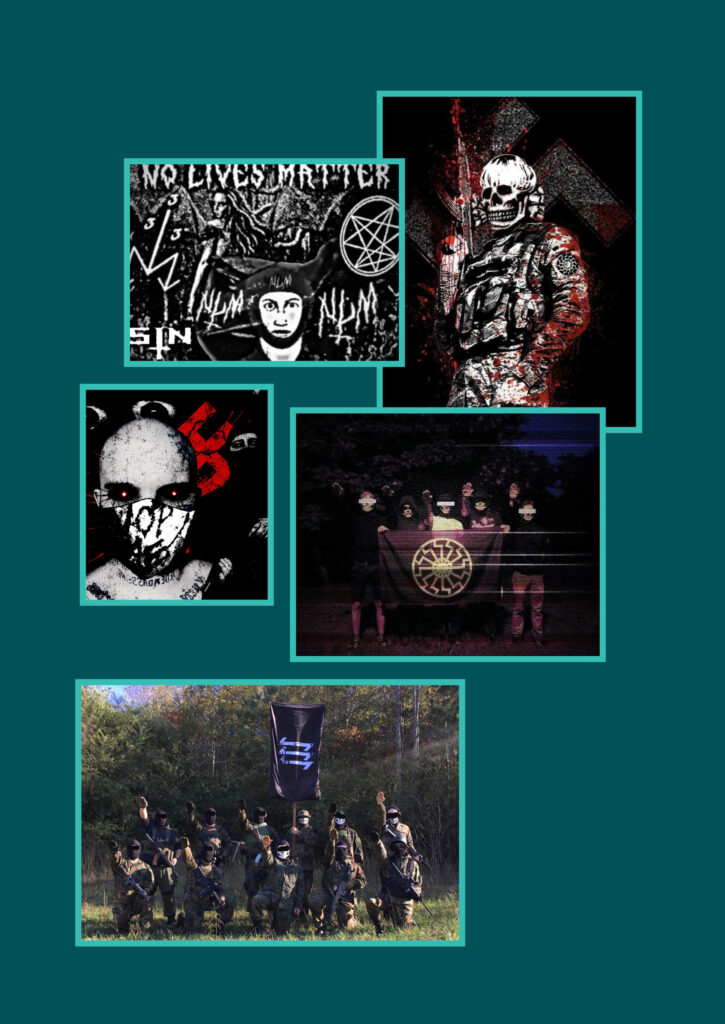
The Maniac Murder Cult, often referred to on social networks by the acronym MKY or MKU, based on its Russian name, ‘Manyaki: Kult Ubiystva’, is the most popular international nihilistic rightwing extremist network among young extremists living in Lithuania. Formed in Russian-speaking Eastern European countries towards the end of the previous decade, it later spread to other regions of Europe and North America. Individuals identifying with MKY have committed or planned to commit murders in some European countries. All nihilistic right-wing extremist groups that have attempted to establish themselves in Lithuania have been influenced by the MKY’s ideological principles.
Involvement in nihilistic right-wing extremist groups often starts with visiting right-wing extremist channels on TikTok or playing popular online games such as Roblox and World of Tanks. Later, radicalised individuals continue to communicate on platforms such as Telegram and Discord. Their involvement in criminal activities occurs in several stages. First, new group members are encouraged to commit minor offences, such as graffiti vandalism or smashing windows. They are then persuaded to commit acts of violence against representatives of racial, religious and ethnic minorities, or homeless people. They are also encouraged to exert psychological pressure on psychologically vulnerable individuals on social networks, forcing them to harm themselves or commit suicide. Finally, members of the nihilistic right-wing extremist network are encouraged to commit murder and record it on video.
Parents, teachers and others close to adolescents often fail to notice when they first become involved in extremist activities. Right-wing extremist ideology on social media is often disguised and presented as dark humour, memes, or works of fiction. Even when parents notice their children’s interest in rightwing extremist ideologies, they often fail to recognise the associated threats and do not take action to stop the radicalisation process.
The following signs may indicate a young person’s involvement in a rightwing extremist group on social media:
- Social isolation
- Spending most of their time communicating on social networks
- Use of terminology, symbols and images that are typically associated
- with a specific social group
- Spreading extremist ideological views and conspiracy theories
- during interactions with individuals in the immediate circle
- Purchasing items bearing right-wing extremist symbols
- Interest in the manufacture of makeshift weapons and explosives
| Intelligence services of hostile states view right-wing extremists as potential perpetrators of their operations |
|---|
| The GRU has attempted to recruit right-wing extremists living in European countries to carry out its operations. Yuri Sizov, an employee of the branch of the GRU responsible for organising sabotage operations in Western countries, visited Russian-speaking right-wing extremist channels on Telegram. Pretending to be a right-wing extremist, he used one of his Telegram accounts to try to find people with contacts to rightwing extremists living in EU countries. While communicating on these channels, Sizov used hateful rhetoric and incited the killing of Black people and immigrants. |


