Contents


China is consistently increasing its military power in order to ensure its security interests and expand its influence
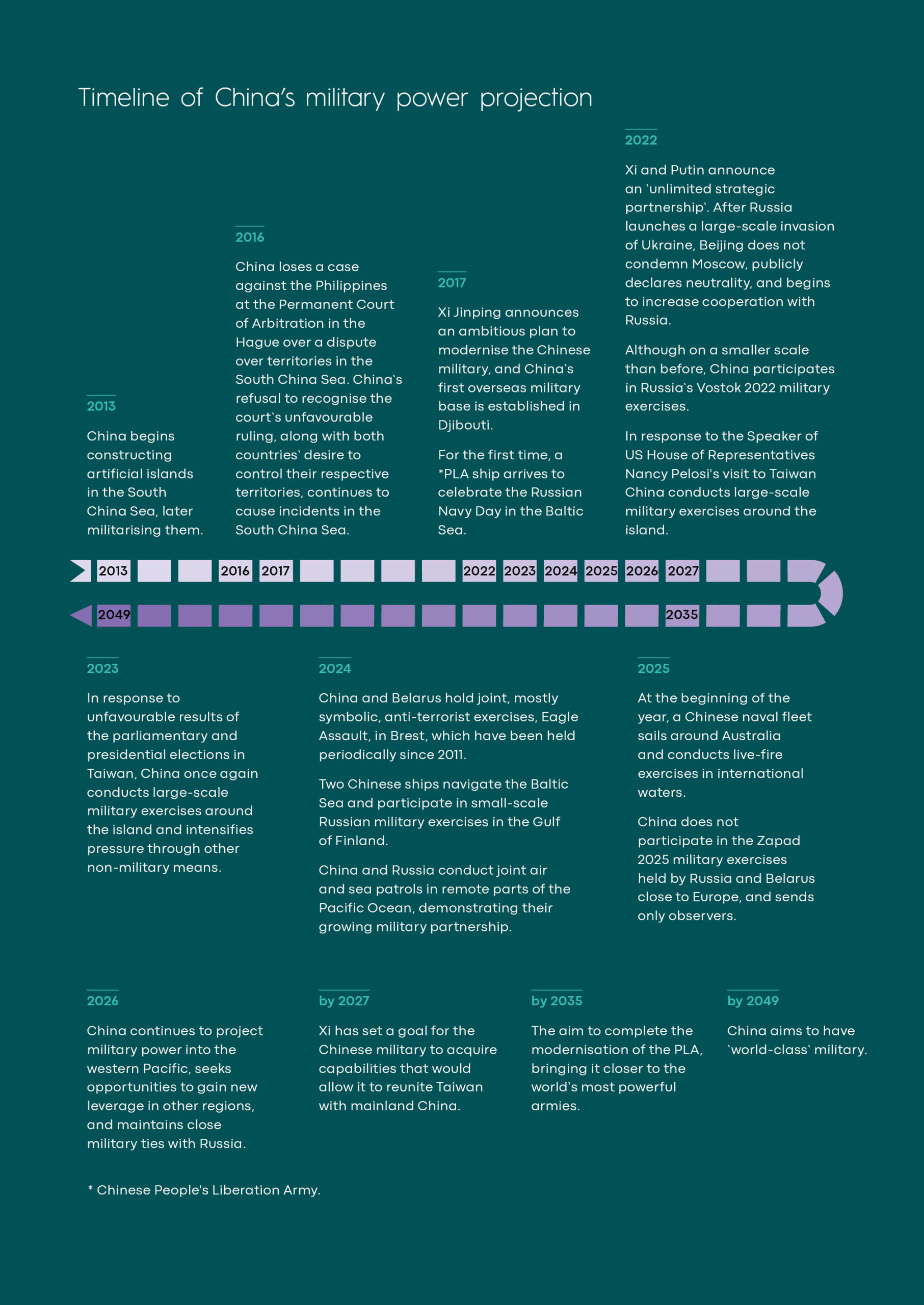
Beijing’s goal is to develop an army capable of winning wars against its most powerful rivals and their allies by 2049, the 100th anniversary of founding the People’s Republic of China. Despite the slowing economy and related social and other challenges within the country, China is steadily increasing its defence budget every year. Beijing is prioritising the modernisation of its Armed Forces, investing heavily in the construction of new aircraft carriers and amphibious assault ships, and strengthening its Rocket Force and Air Force. China’s growing military power in the Indian and Pacific Oceans poses challenges to the economic and security interests of NATO allies and partners, as well as freedom of navigation, and increases tensions in the region.
Reunification with Taiwan remains a key strategic goal for China. In recent years, Beijing has stepped up political, military and information pressure on Taipei in order to implement its One China Principle and deter the island from any independence aspirations. The rhetoric of senior Chinese Communist Party officials towards Taiwan has also become more aggressive, including direct threats of military conflict.
During exercises held in the spring of 2025, in addition to the usual blockade manoeuvres, China’s forces simulated strikes on Taiwan’s defence and energy infrastructure and trained to block strategic supply corridors. At the end of 2025, China held another unannounced exercise around Taiwan to warn its potential foreign allies. Compared to previous exercises, these were larger in scope and took place closer to Taiwan, featuring the deployment of more advanced amphibious ships and significant aviation activity. In addition to deterrence, the Chinese military leadership’s goal is to gain experience, to exhaust the Taiwanese military, and reduce Taipei’s alertness by normalising constant military activity around the island.
AFP photo
China seeks to establish dominance in the South China Sea and uses various means to disrupt movement and aggressively demonstrate control over the territories it has claimed, including the militarisation of islands. In 2024–2025, tensions between China and the Philippines grew over strategically important and resource-rich parts of the South China Sea. Chinese Coast Guard vessels in the South China Sea, especially near the Spratly Islands, regularly carried out dangerous blocking and ramming manoeuvres, as well as using water cannons against Philippine vessels. Such incidents significantly increase the likelihood of unintentional military incidents and escalate the security situation in the region.
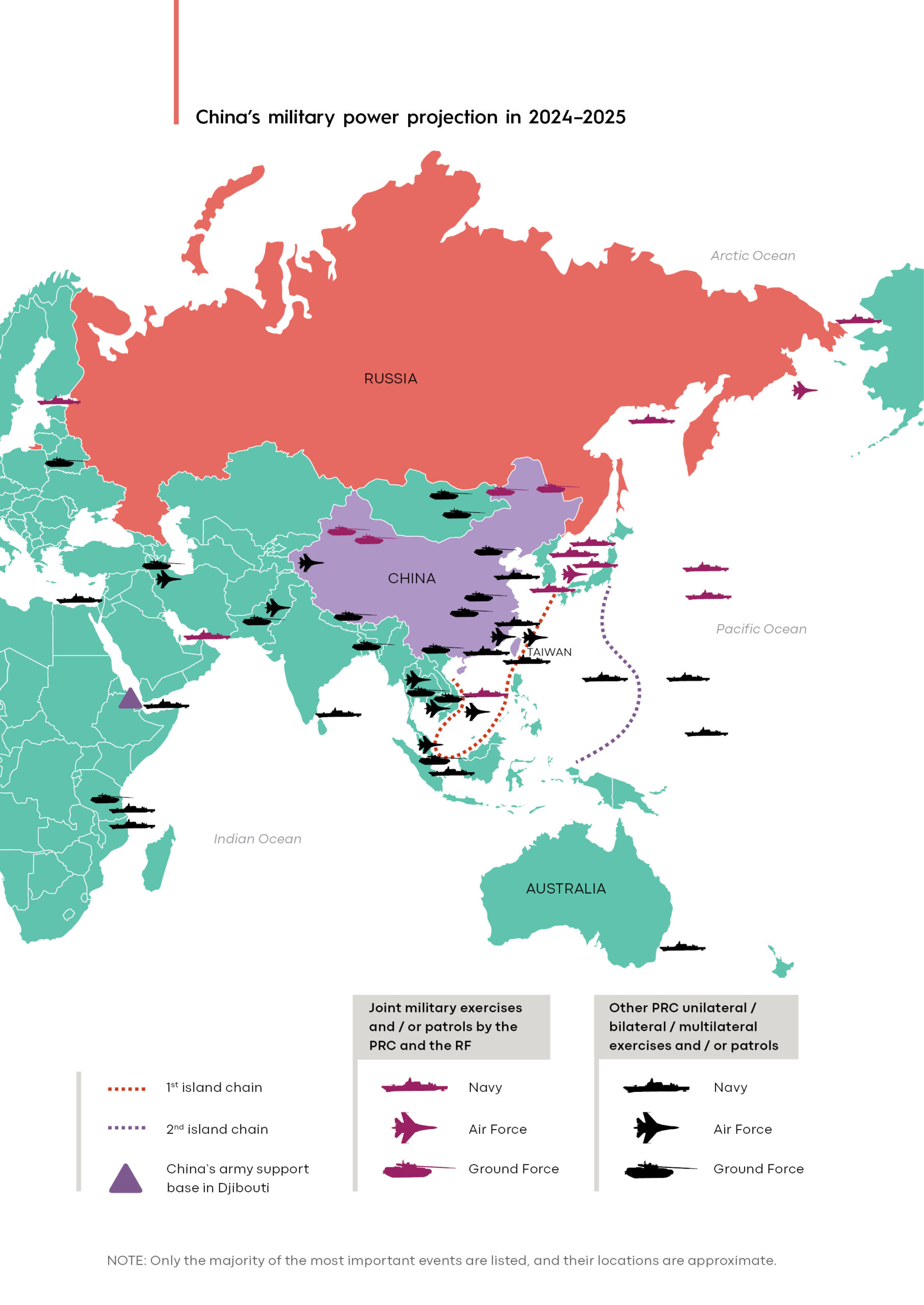
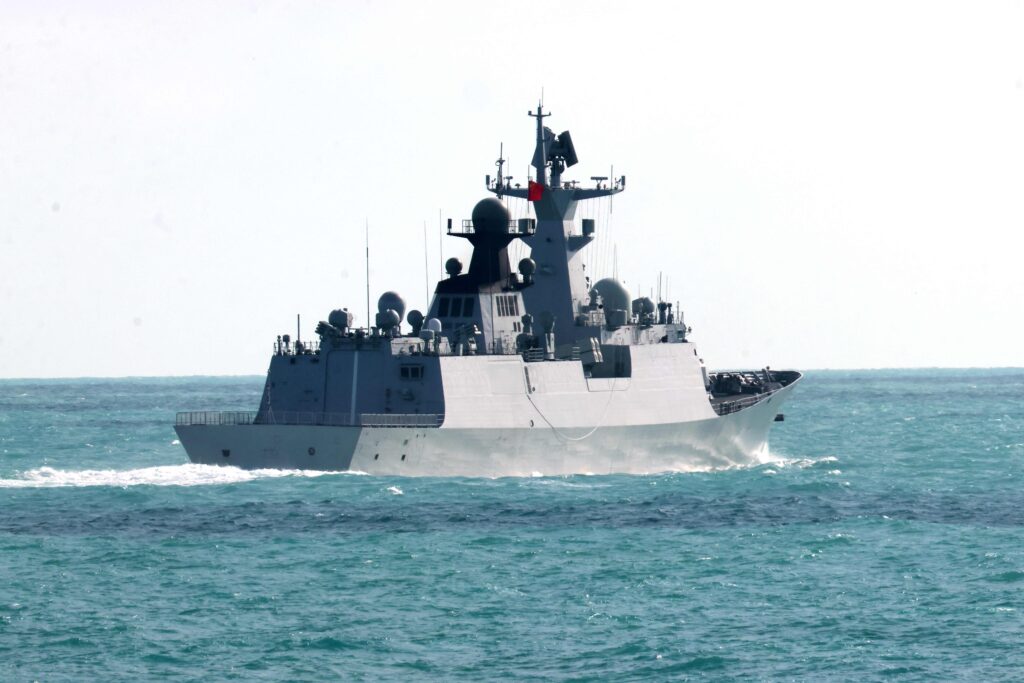
In addition, the so-called far-sea operations further away from China’s shores are being carried out more actively: in early 2025, a Chinese naval fleet sailed around Australia and conducted livefire exercises in international waters. This operation was the southernmost mission of the Chinese Navy. In June 2025, two Chinese aircraft carriers and accompanying military ships navigated together for the first time near the second island chain in the Pacific Ocean.
In this regard, China is not only sending a message about the naval dominance in the region and seeking to deter third countries from interfering in a possible military conflict with Taiwan, but also demonstrating its dissatisfaction with the US, Japan and South Korea’s military partnership in the Pacific Ocean, and the pro-Western regional security formats QUAD and AUKUS. It is likely that the scale and geography of such Chinese operations will expand in the future.
Click on the image to enlarge it.